On Facebook recently, Mollena asked: “White “ª#”ŽSexualityEducators”¬: what are you doing to actively foster inclusivity? Diversify your audience? Support your Peers of Color?” [link.] I’ve been writing and writing and thinking about all of the things I’ve been reading and digesting around #blacklivesmatter and race and inclusion, and this question got me thinking hard, and answering with some clarity, and identifying some places I need to keep working.
 On Facebook recently,
 1. Read, read, read.
And listen. And pay attention. And shut up. And witness. And try to learn, and unlearn.
2. Pay attention to whose voices I amplify.
I have a small reach, a small field of folks who read what I share, and I pay attention to what I put into that sphere and recommend. When I don’t pay attention, I tend to stay within my white privilege bubble and retweet, link to, and recommend other white folks. This is not because people of color are not saying things that are relevant to me (and to you all) or that they are not brilliant—because duh, they are. Rather, I think I do this because of my personal (and often invisible to me) bias of whiteness. It takes conscious work for me to not default to whiteness, but I want to change that. So I pay attention to who I share and follow and who I surround myself with.
3. Decline to participate in (unconsciously) all-white spaces and events and publications and projects.
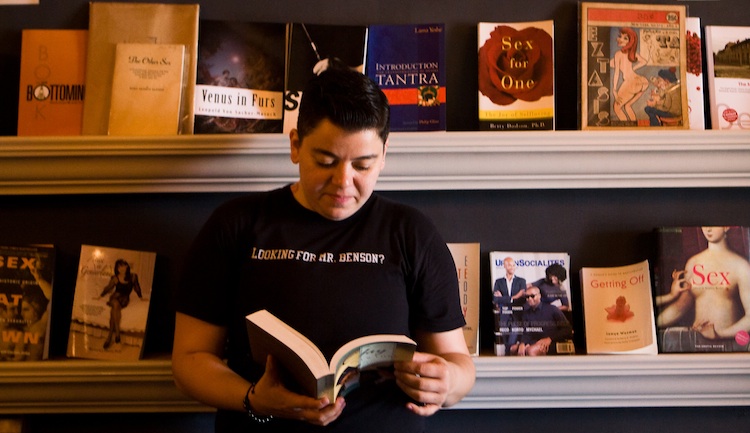
To be fair, I’ve only declined a few times, and this is something I’m working on improving. I don’t always think to ask who else is in the book or on the panel before I say yes, especially if it’s something I know of and admire. But recently, a sex education book came out with twenty photos of the white faces of contributors on the back, and Aida Mandulay called it out and WOC Sexual Health Network followed up, it is incredible to me that nobody noticed that before publication, or that if they did, nobody worked to change it. However, I am sure I have been in anthologies that were all-white, but since most of my publications are erotica, photos of the authors are included very rarely. And the sexuality education field is incredibly dominated by white folks (because most fields are, because racism). Personally, I have noticed often recently that many of my small group collaborations are all-white, and I need to think about that more (and to keep noticing that most of my communities are white, and work on the underlying issues of why that is).
4. I pay attention to the language I use.
As a genderqueer non-binary person and a feminist queer, I know how much language matters. I pay deep attention when someone talks about racist language—mine or others—and I do my best to pay attention to the words I use, their origins, and their uses.
a) I love reclaimed language, but when there are words that have been used against a minoritized group, I recognize that I don’t have a claim to use them. I can reclaim words that have been used against me. As such, there are certain words I just don’t use, whose histories are too controversial, and whose communities I respect.
b) There are a lot of words that have snuck into our language which have oppressive and racially-based origins, and often I’ve just never thought about it or made the connection. Recently, with the protests in Oakland and Berkeley, my neighbors and I have watched a lot of the live feeds, and have seen the police show up with “paddy wagons,” and then we all had a brief chat about how that is a derogatory slur referring to Irish folks, and tried to figure out what else to call them instead. And when I hear folks use the word “gypped” to refer to being ripped off (which happens more often than I’d expect) I remind them that comes from the oppression of Roma people. Often, people reply with things like, “Oh yeah, right, I never really thought of that …”
c) Know the words I use and where they come from. The queer reading series I co-hosted and -produced with the late Cheryl B from 2010-2011 was called “Sideshow,” and once, a colleague pointed out that the “sideshow” has a pretty terrible history of showing off the “freaks,” and that they wouldn’t be participating. I liked the feel of it at the time, but I wouldn’t use that word again on a project. Especially because I recognize that as an able-bodied and generally mentally well person, it is not my word to reclaim (see 4A), it is my word to respect and stop using (see 4B). See also: Strange Fruit PR Firm [Changes Their Name] After Getting a History Lesson From Twitter.
d) Very deeply engrained in the english language is the dark/light dualistic binary and the use of the concepts of “shadow” and “dark” for bad, unknown, dangerous, and uncharted territory, and of “light” as all things good and holy. I would guess these concepts have more to do with the human psyche than race—however, when used in a racist culture, they reinforce racism subtly and intrinsically. I want to know more about this and do a bit more research on language and archetypes. Meanwhile, though, I am doing my best to avoid the dark/light dualism to stand in for bad/good, particularly when there are thousands of other more thoughtful and interesting metaphors to use.
Language is always changing, and I try to stay flexible in my relationships with words, even if I happen to love them (or have used or over-used them in the past, see 4D). Recently I’ve been discussing the usage of “minoritized” instead of “minority,” for example (still working on that distinction and curious about the reasonings). I’m curious how language changes and moves, how it both reflects and changes culture. This is some of my favorite language-nerdy stuff.
5. I call myself on my privileges.
When I talk about identities as concepts, and my own concepts, I don’t just give my marginalized positions (like queer, kinky, genderqueer, working class, survivor) but I also share the areas where I have privilege and am working to have more awareness (like white, able bodied, american, college educated).
6. When I’m up in front of a group or workshop, I listen when someone challenges my positions, and I call participants out.
I particularly listen when someone challenges me in areas where I am less expertise or have privilege and am less aware of how those oppressive dynamics work. I don’t always know I try to notice it when someone says something that expresses a bias or privilege, and to say something, to call them on it. That’s pretty hard for me and I’m not perfect at it, and I often freeze up or get caught in holding the space of the workshop, and I can’t think of what to say. So I’ve taken to at least saying exactly that: “I heard you just say ___ and I can’t really think of what to say, but I think you have some bias there.” Then I try to move on.
7. I call out (or call in) when I see something.
I do call out when someone I know and feel some closeness with has done something I think has some overlooked bias in it, but I mostly do that privately and offline. I don’t spend much time calling out in the general conversations online, or chiming in when someone else has been called out. I sometimes fear that I should and have some guilt that I should participate in that more, but I also know how I am deeply introverted and more witness is better than more conversations for my energetic ability. I witness other’s calling out constantly and I read read read and listen and try to learn what went wrong, what was going on, and to apply that to my own work. With some folks I’m close to, we have spent a lot of time digesting and thinking about the project and how to do better in the future. See also: Calling In: A Less Disposable Way of Holding Each Other Accountable.
8. When I fuck up, I apologize, listen, fix it (if I can), and do better next time.
There’s a fine balance: I am trying to recognize that we’re all human (including me) and I fuck up sometimes, but not to dwell in the fucking up so much that it makes me paralyzed to keep trying, and to still do the best I can to make up for, apologize for, and understand for my mistakes. I am a creator and I want to make art and writing that reflects culture and my inner world, and a huge piece of that is my desire to make it better through social activism. And because I am making things, not just witnessing and critiquing, I have messed up before and I will mess up again. I am doing my best to be okay with that inevitability, and to know that messing up is a necessary part of the process of trying and improving. I have strategies to both protect myself (and my highly sensitive person / high reactive / intuitive empathetic poet self) but also to listen, learn, back up, integrate changes, apologize, and move forward.
I’m sure there’s more I could do.
I am always pondering the ‘more’ of activism and the new, previously unknown parts of my own privilege to which I am still blind. But for now, this is what I’m doing, and I see a lot of room for growth in just what I’ve laid out here and what I’m already doing.
It’s been very interesting to reflect on what I am doing, actually. Reading the original thread on Mollena’s Facebook page gave me lots of ideas and more insight into how I engage the way I do, and what is good for my particular personality and skills. I’d love to hear what you all are doing, too, if you feel like sharing.
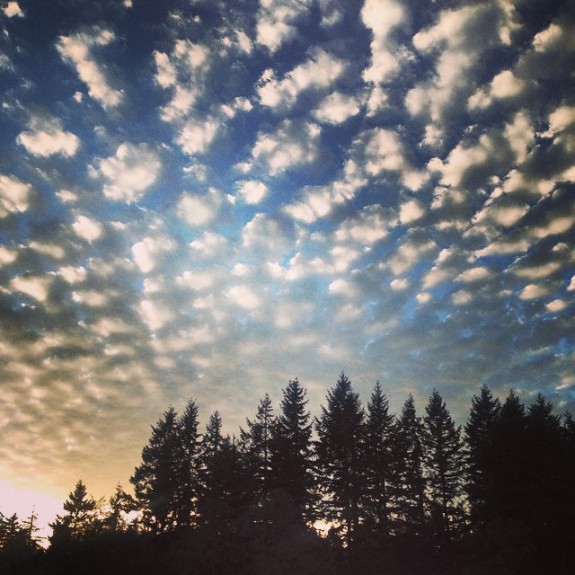
 Most of the time, my body has the answer. My own body, this vessel, this corporeal flesh with pulses and nerves and bone, these muscles that move me around and enable me to jump and reach and grasp and squat and pump. This unexplainable, inimitable machine that lets me experience the world through my senses, that gives my brain input about taste and smell and texture.















 ; I have my iPod on to some soothing lofi mix Muse made for me; I have lube in my pocket for a quick jerk-off session before we arrive in New York. I need all the sanctuary and release I can get before returning to that hyper-stimulating city.


























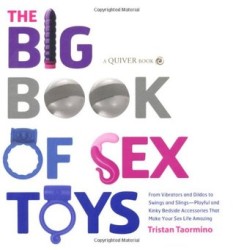 The Big Book of Sex Toys: From Vibrators and Dildos to Swings and Slings—Playful and Kinky Bedside Accessories That Make Your Sex Life Amazing